
Laguiole Fontenille Pataud: the forge and its knives
The forge introduces itself: its workshop, its signature and its knives
More about this forge
You own a knife by Laguiole Fontenille Pataud? Then you can have it entered into the A.I.P.C.L. We check that it is genuine, and your knife receives its own number, its own page and its certificate - a proof that stays with it, even when it changes hands.
What we look at on a knife by Laguiole Fontenille Pataud
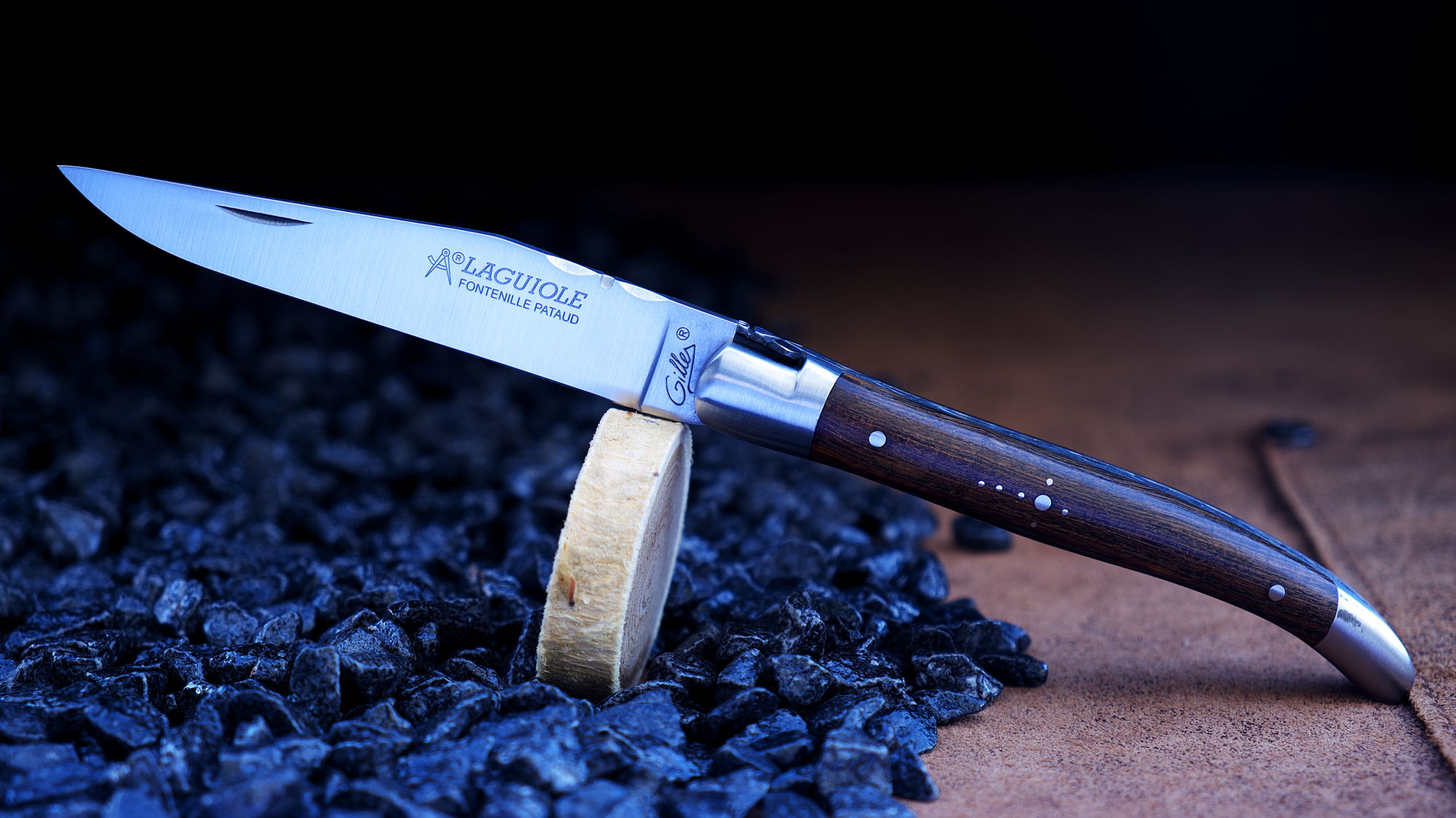
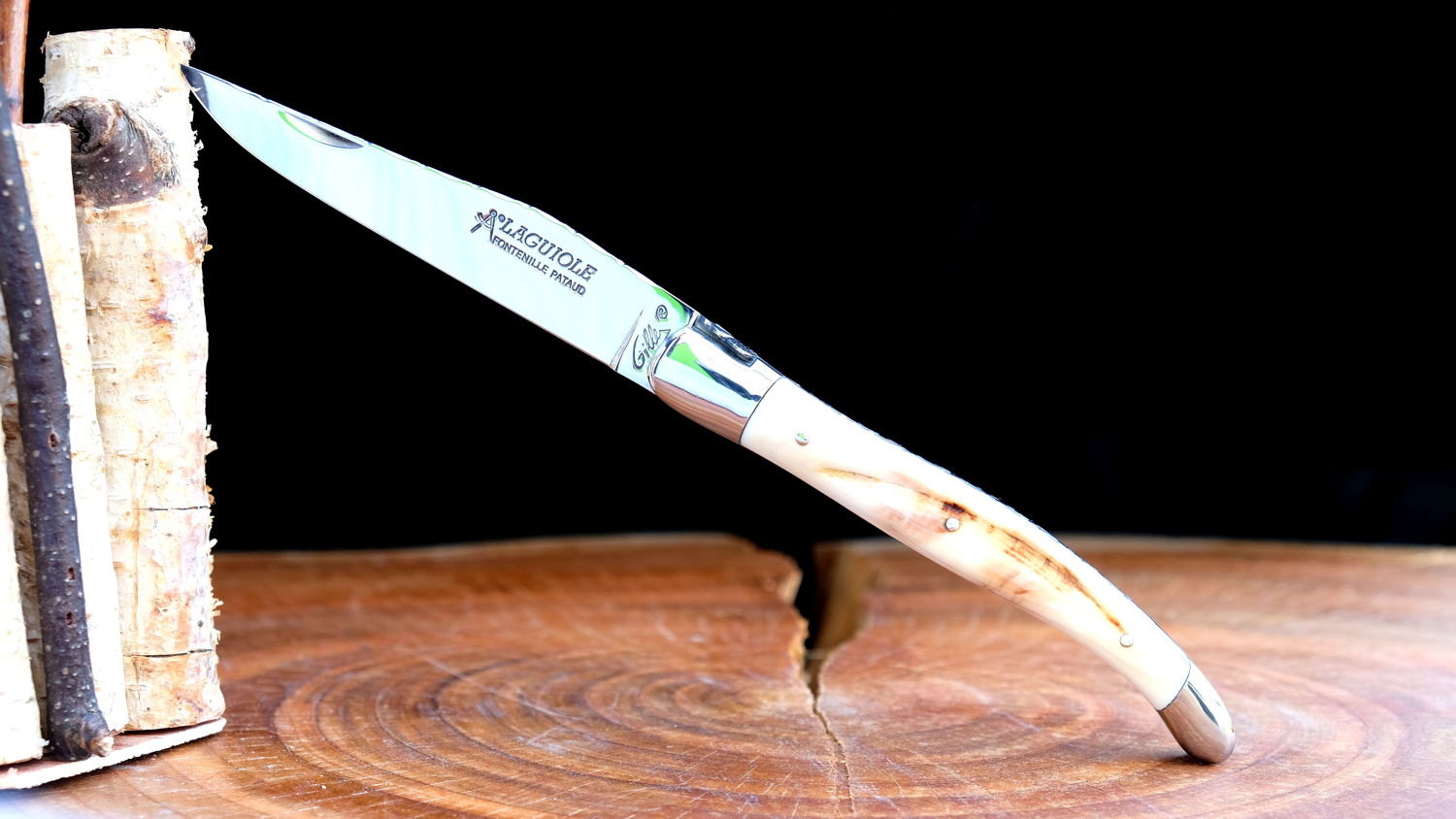
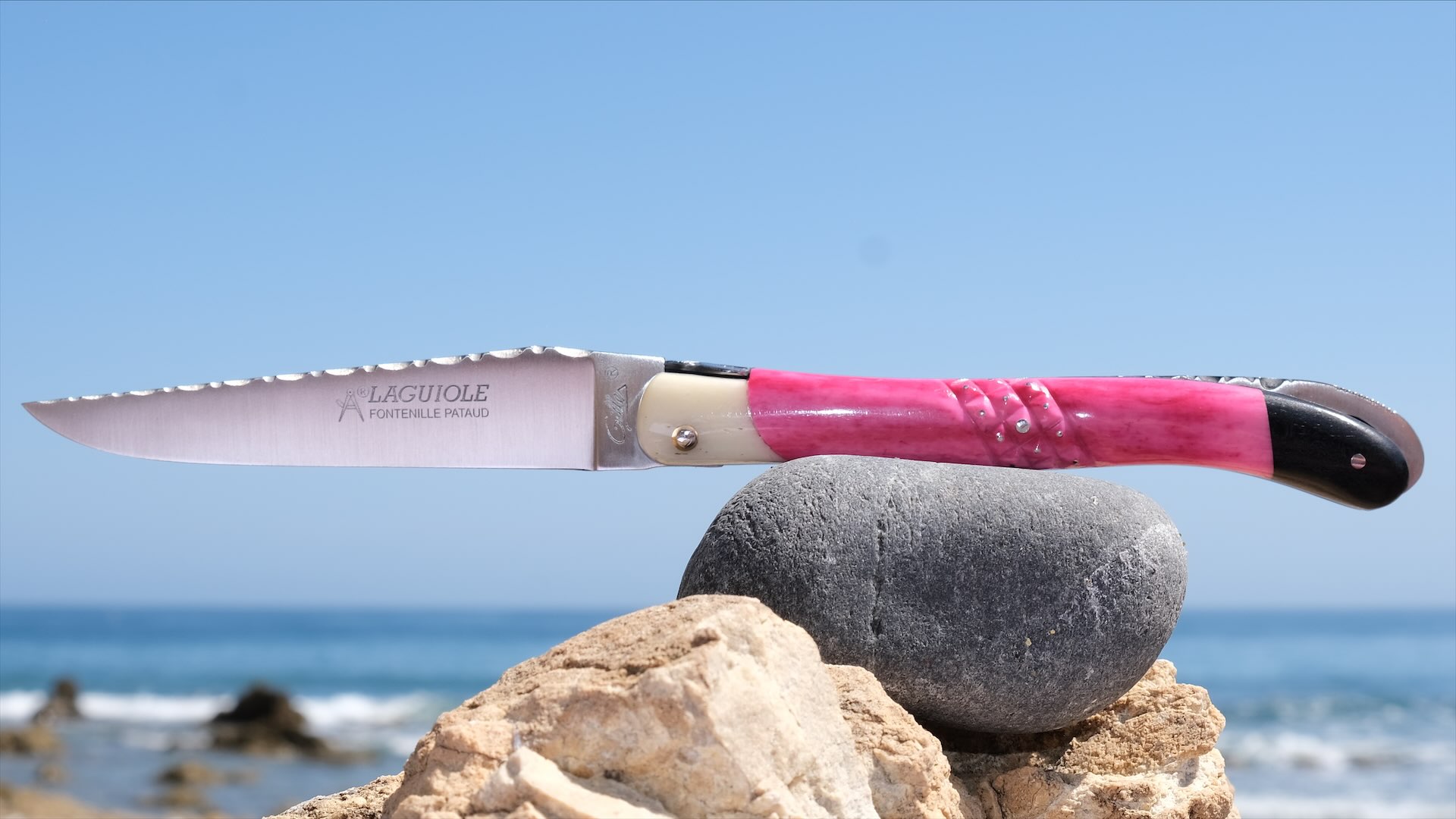
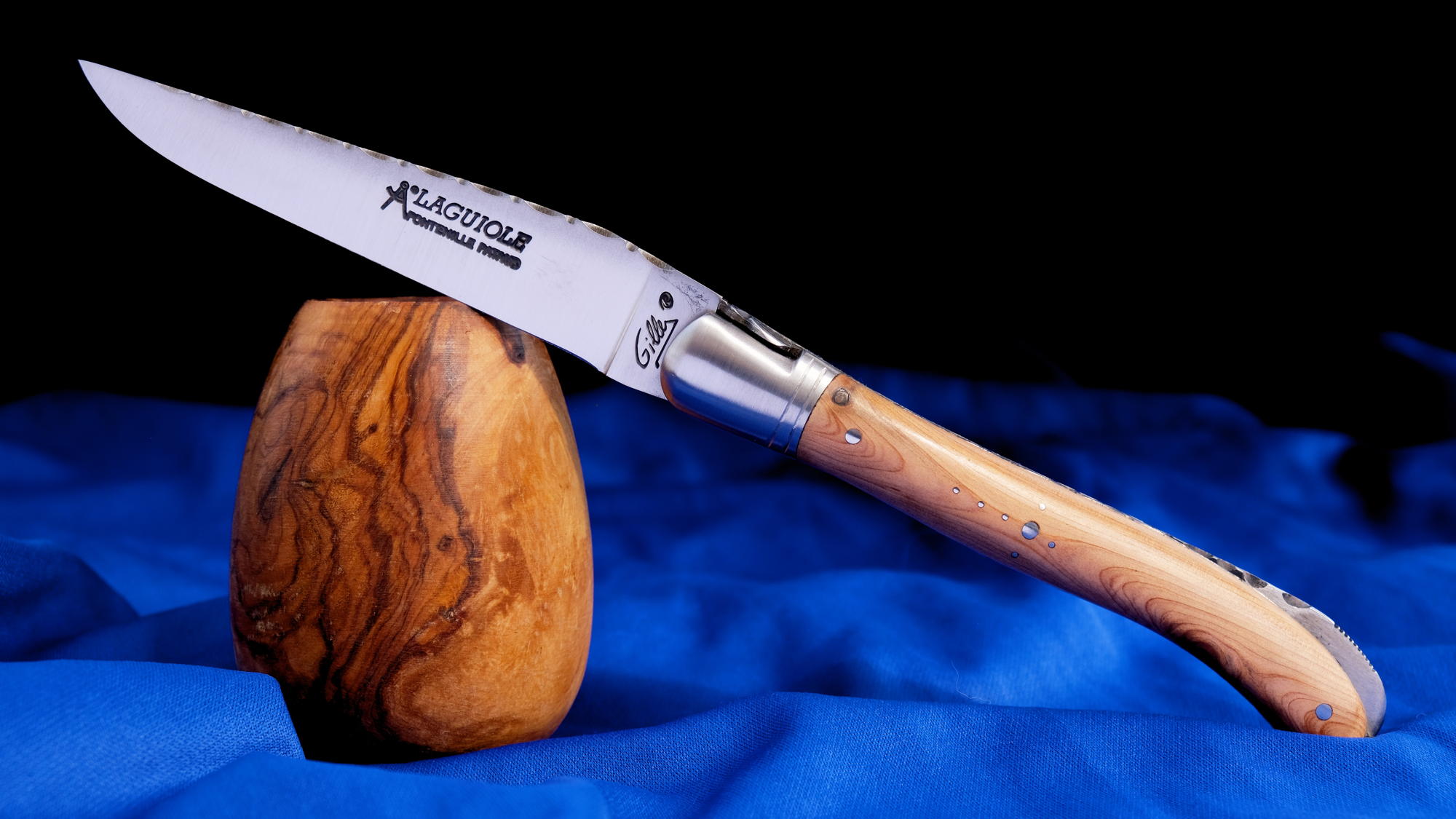
Every forge has its signature. With Laguiole Fontenille Pataud it is the fine chasing, the exact lines and the steel quality by which this Thiers workshop is recognised. That is exactly what allows a knife to be identified, and it is what we examine in your photographs. If a question remains, we go to the forge itself.
A portrait of the forge
The story begins in 1929, when Jeanne Fontenille Pataud took over the Cornillon cutlery works in the Rue de Paris in Thiers. A woman at the head of a cutlery workshop was anything but usual at the time. Under her direction came cutlery with handles of mother of pearl, ebony, amber and horn; after the Second World War scissors, razors and table knives were added. With around twenty staff the atelier was a regional centre of the trade.
In 1994 the manufactory was at risk, as the owner had no successor. Gilles Steinberg took over production in 1995 at the age of 28 and refocused it on hand made pocket knives. In 1997 he created the Gilles mark as a pledge that every knife is genuinely made by hand. By 1998 the forge was among the first cutlers selling online, and in 2000 it received an international development prize from the French finance ministry. Since December 2018 Yann Delarboulas and Cécile Dissay have run the company.
Every Laguiole is made entirely by hand in France, with traditional filework on spring and bee. Young cutlers are trained alternately in the workshop and at the oldest cutlery school in Thiers. The range covers Laguiole knives with and without a lock, the Le Thiers line, Corsican patterns such as Vendetta and Sperone, and the well known Laguiole Magnum corkscrew. The logo, a compass, was registered as a mark by Gilbert Cornillon as early as 1918 and stood for traceability from the very beginning.
How it works
You register your knife. Right here on aipcl.com, with no sign-up beforehand: name the forge and upload the photographs - open and closed, the bee, the spine, the blade with the forge mark, and if available the receipt or packaging. Then you pay the examination fee; we create your customer account along the way.
We examine it. We compare your knife with what we know from 30 years of trading with French forges, and when in doubt we ask the forge itself.
You get the result. If your knife is genuine it receives its own number, its page on aipcl.com and the certificate as a PDF. If it is not, we tell you that too.
What it costs
10.00 eurosor 15 CARMOS points from original-laguiole.de - what those are is explained there.
Examining and registering one knife costs 10.00 euros.
If the examination shows that your knife does not come from a French forge, we refund the amount, of course. You pay only for a certificate you actually receive.
You order and pay here on aipcl.com, by PayPal or by bank transfer in advance. With the payment you buy the examination, not the certificate; whether we issue it depends on the result of examining your photographs.
Order the examination (10.00 euros)