
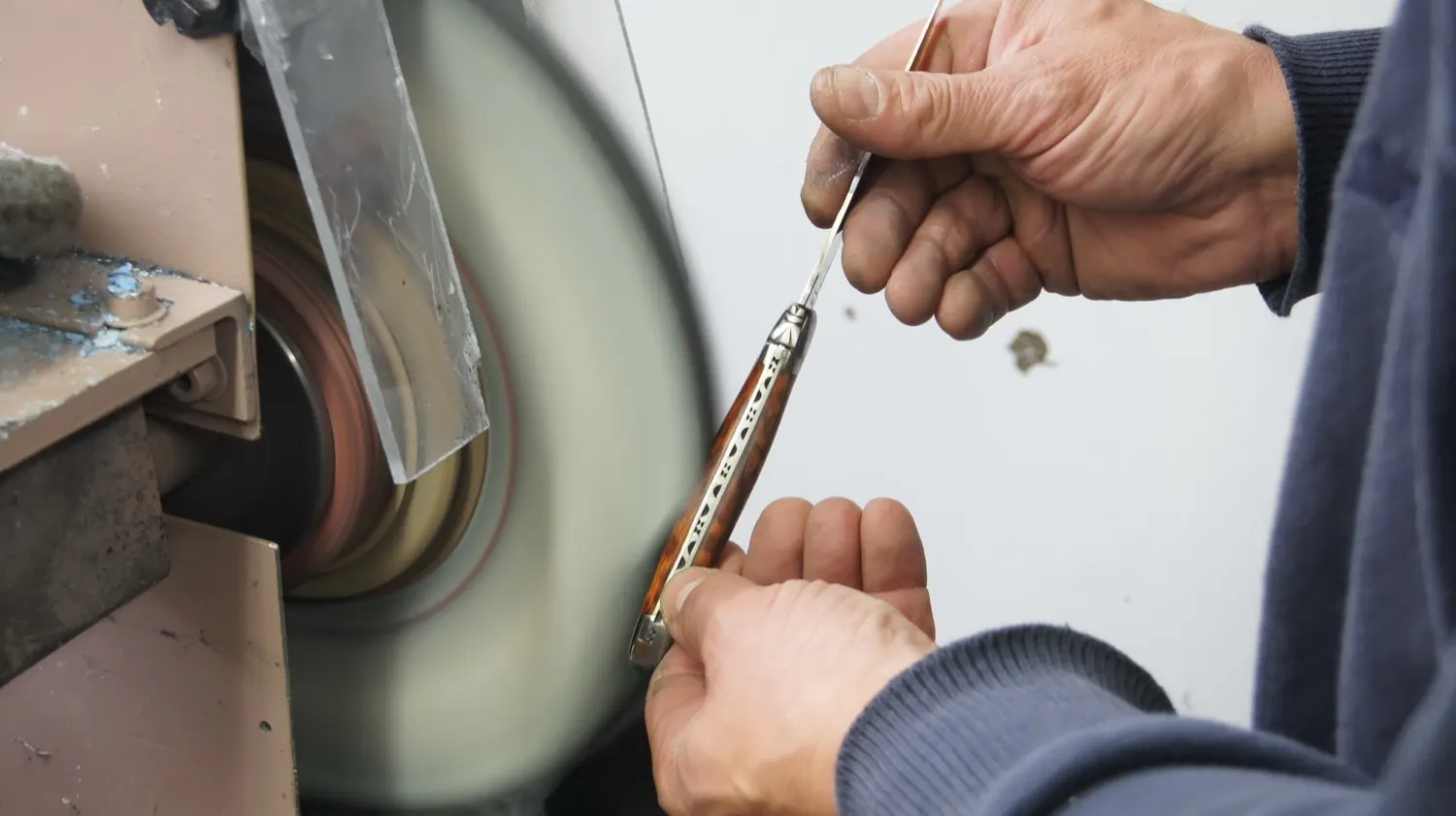
 Photo by the forge
Laguiole en Aubrac: the forge and its knives
The forge introduces itself: its workshop, its signature and its knives
A portrait of the forge
In Espalion, in the heart of the Laguiole country, Laguiole en Aubrac brought the cutler's trade back to life. Knife making there goes back several centuries: as early as the seventeenth century the plain carters' knives were made here from which the Laguiole later grew. The Salettes, Calmels and Pagès families shaped the region, but a fire in 1930 destroyed much of that heritage. In the 1980s the tradition was taken up again, with a clear intention not merely to preserve it but to carry it forward.
Every knife is made from start to finish by a single cutler, including the hand worked spring decoration and the bee. No stamped parts are used. The forge and workshops are in Montézic and Espalion, with their own furnace and their own history, which is rare among Laguiole makers. France has awarded the forge the state label Entreprise du Patrimoine Vivant. Almost three quarters of production is exported, and the forge has been honoured at Nuremberg in 2003 and 2005 among others.
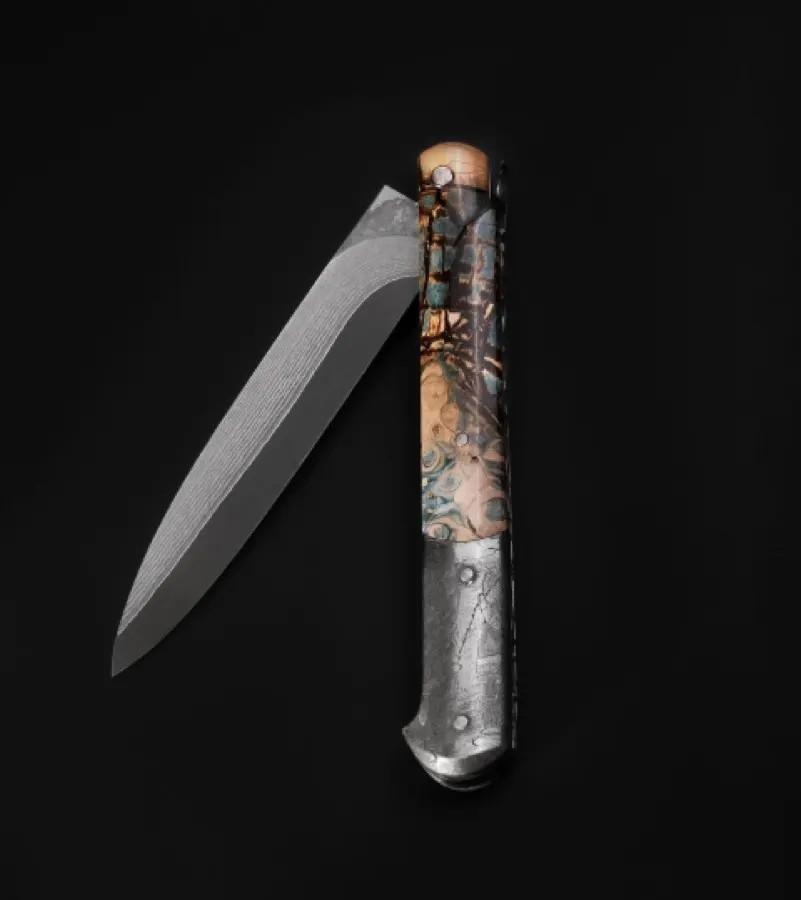
The range runs from pocket knives in plein, brosse and brillant finishes through double platines models to cutlery, wine accessories and kitchen series. The damascus knives and special editions by master Pierre Martin enjoy particular recognition and are among the most sought after collector's pieces of all. Every knife carries a lifetime guarantee against manufacturing faults.
Inside the workshop
11These pictures were provided by the forge itself.
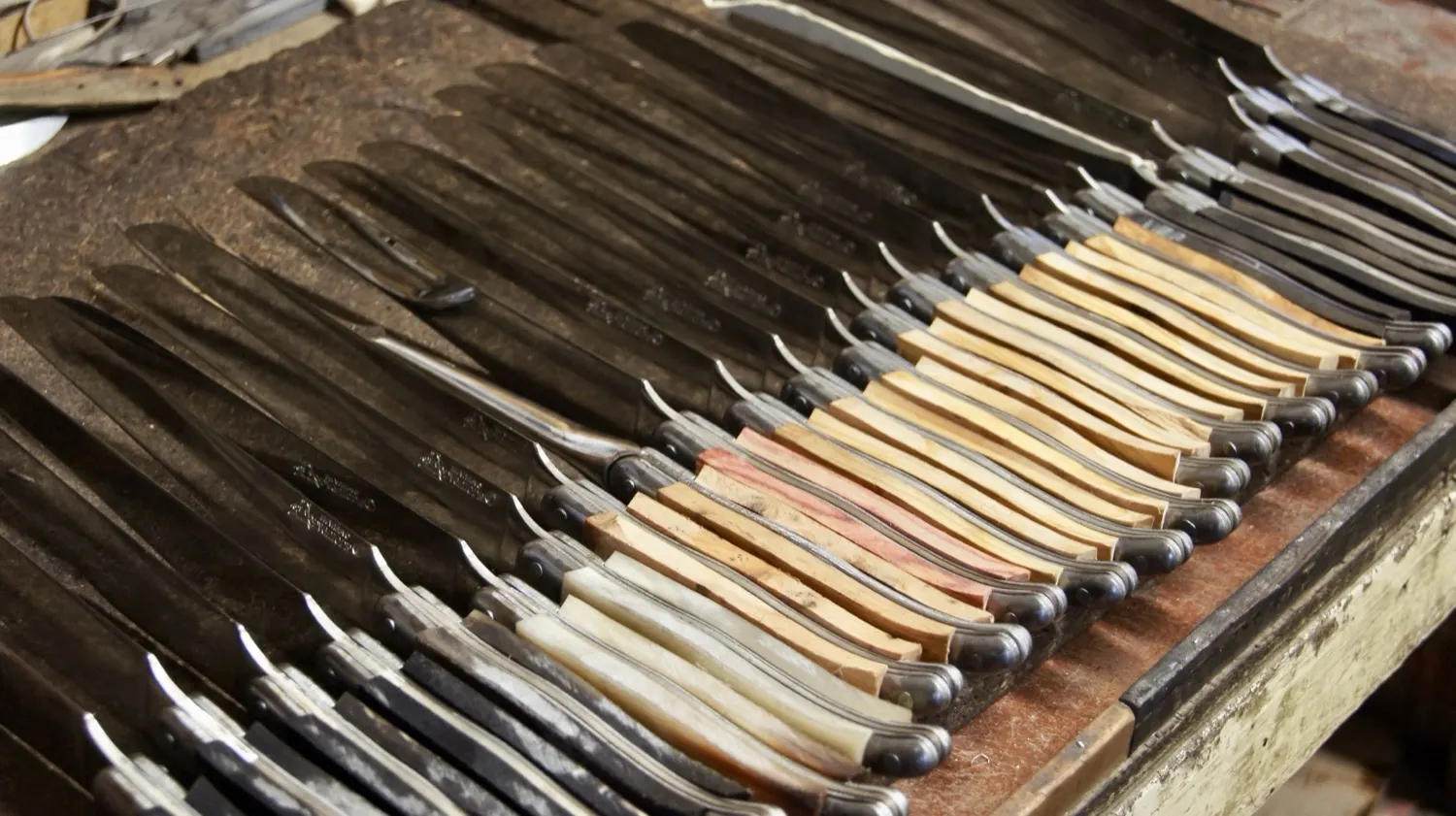
The blank goes into the fire. A smith reads the temperature from the colour; there is no thermometer for this.
Photo by the forge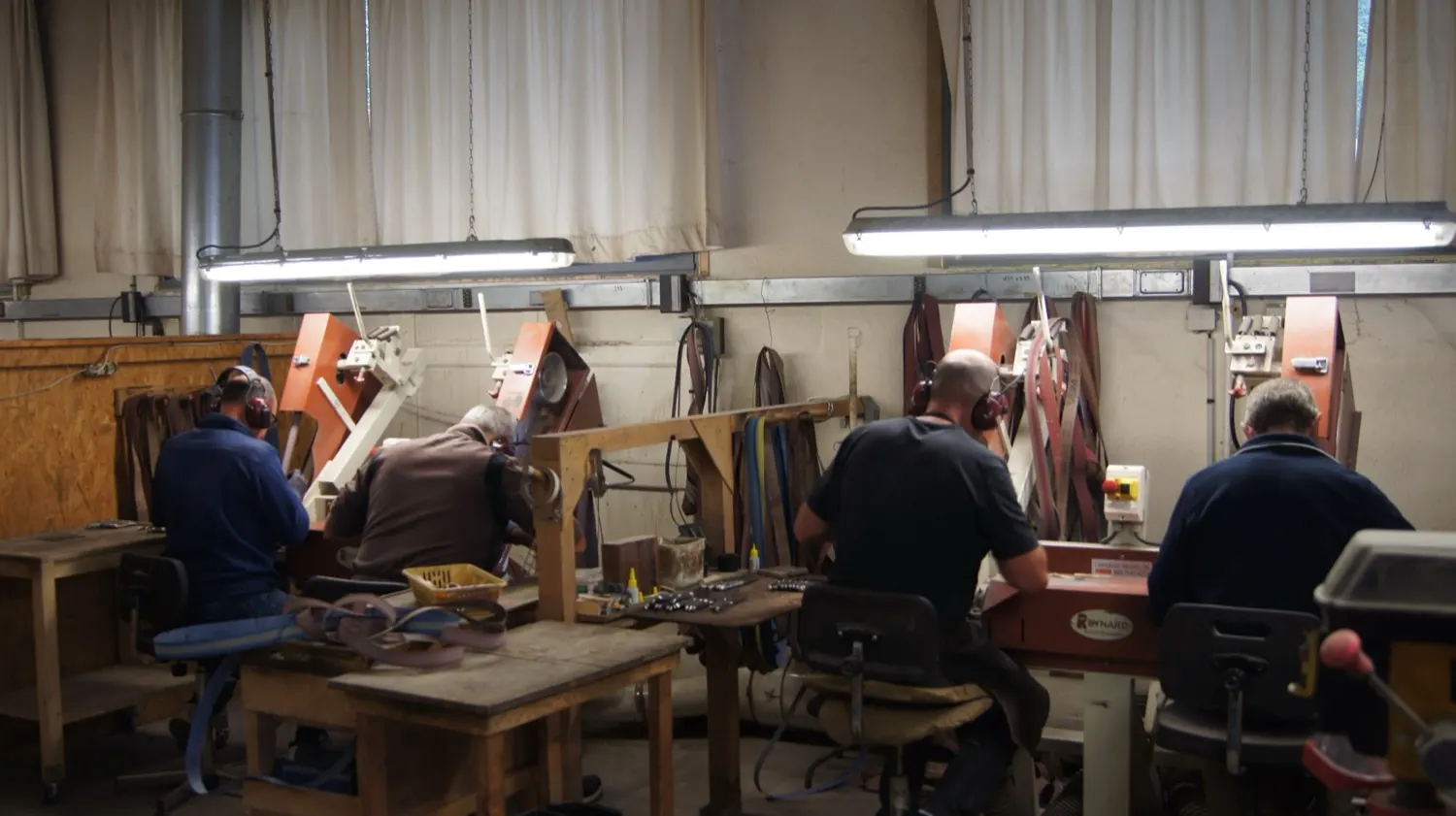
In the furnace the next blank waits until it is at forging heat.
Photo by the forge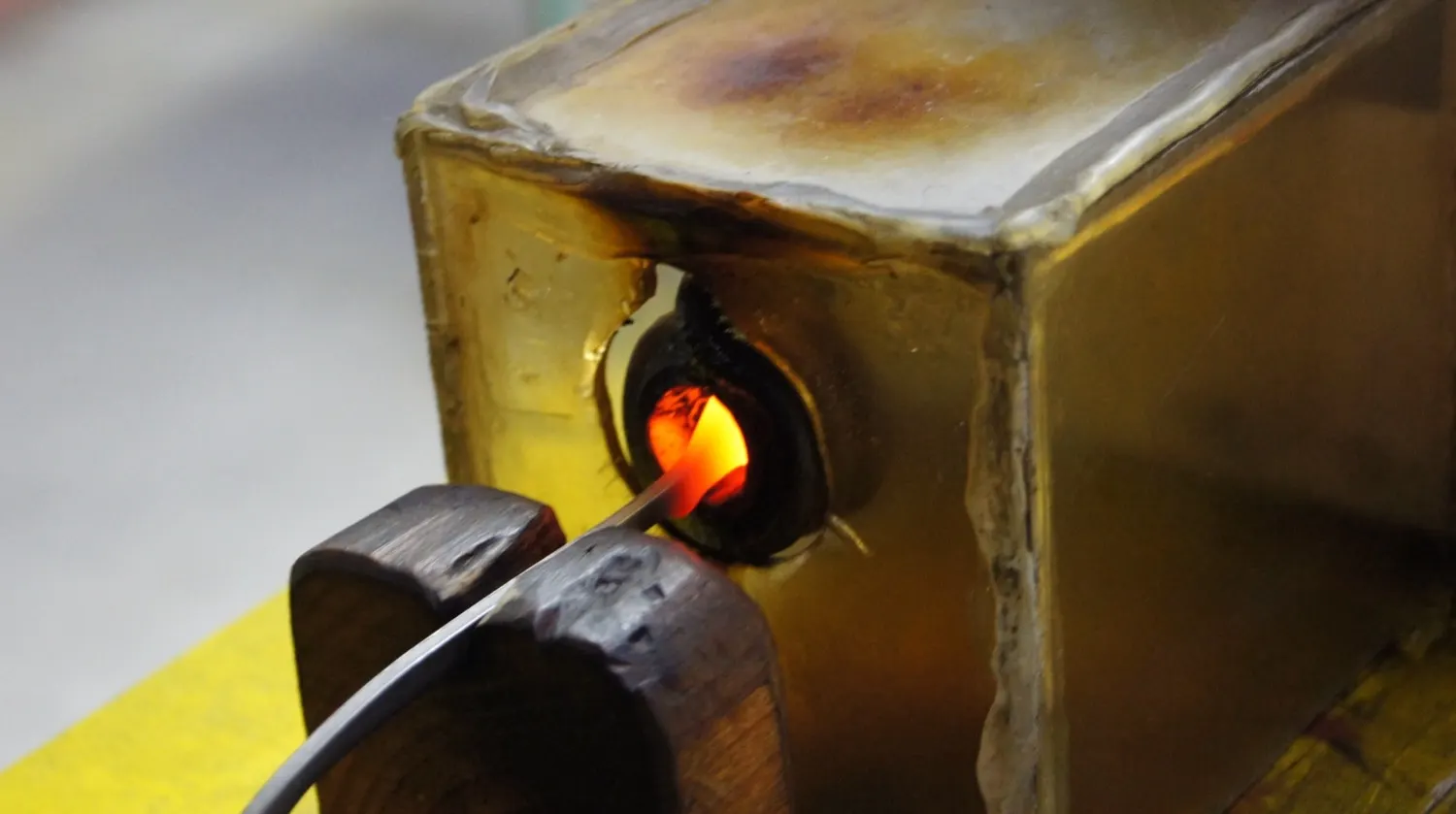
Four damascus blades after etching. The pattern comes from the layers forged on top of each other, not from the surface.
Photo by the forgeNew and remarkable
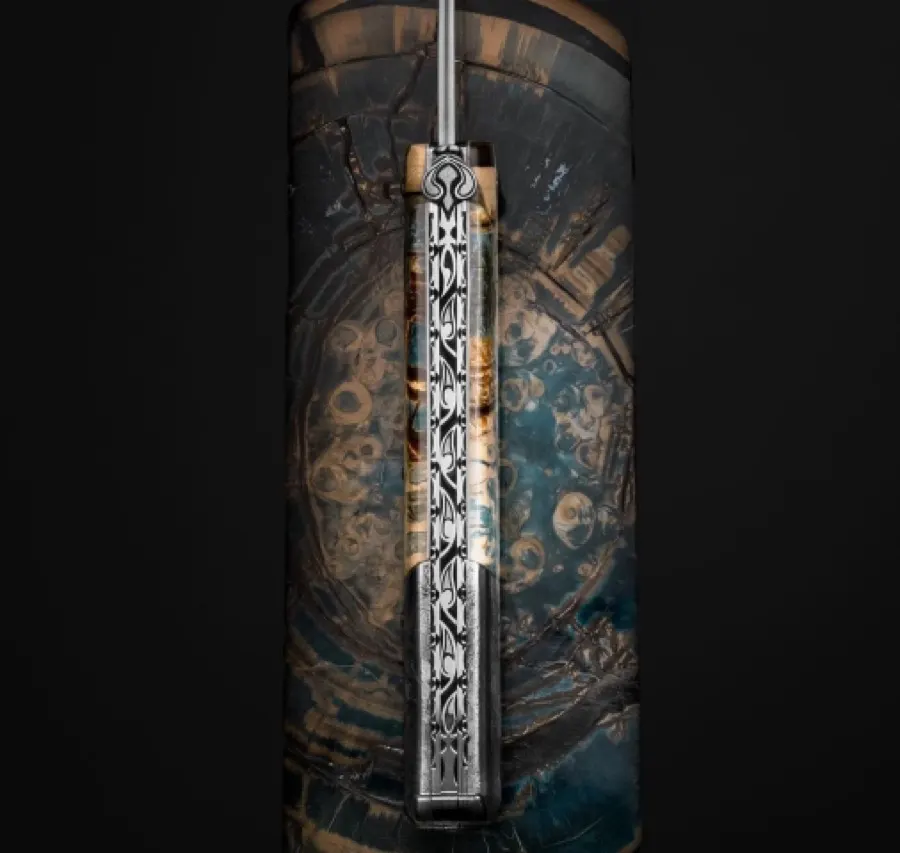
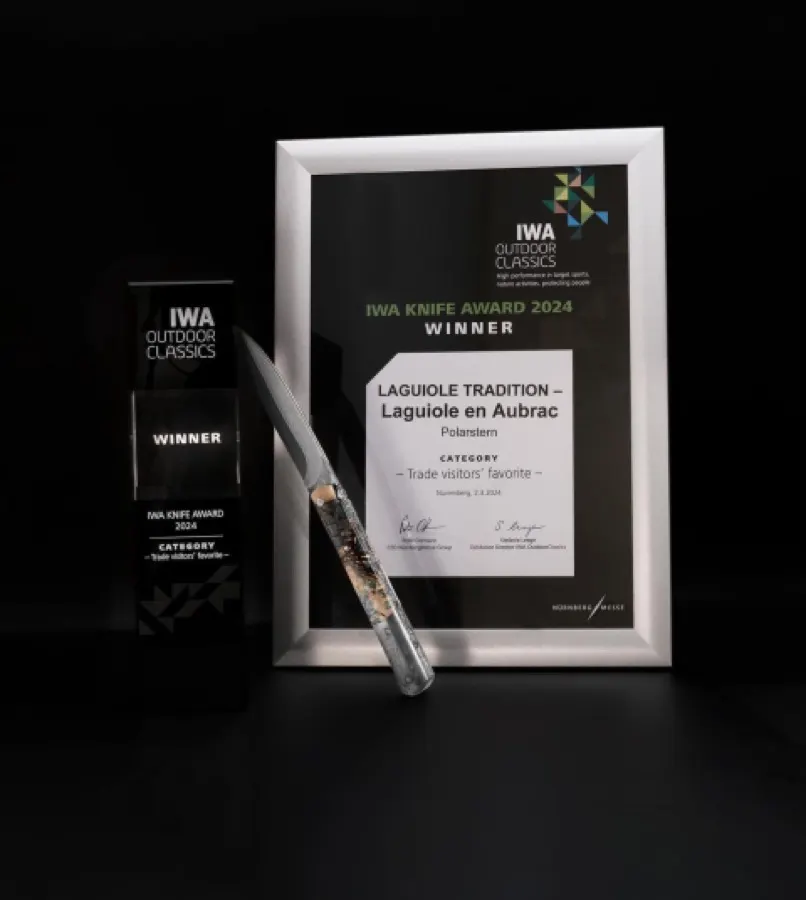
11What the forge shows us: new models, special editions, arrangements from their own workshop.
Where the knives are made
Laguiole en Aubrac
Everything about this forge, its history and its signature is on our page about the forge.
Have your Laguiole en Aubrac knife examined
You already own a knife from this forge? We can examine it and issue an A.I.P.C.L. certificate of authenticity - no matter where you bought it.
You own a knife by Laguiole en Aubrac? Then you can have it entered into the A.I.P.C.L. We check that it is genuine, and your knife receives its own number, its own page and its certificate - a proof that stays with it, even when it changes hands.
What we look at on a knife by Laguiole en Aubrac
Every forge has its signature. With Laguiole en Aubrac it is the local handle materials, the spring work sanded by hand and the shapes that breathe the Aubrac. That is exactly what allows a knife to be identified, and it is what we examine in your photographs. If a question remains, we go to the forge itself.
How it works
You register your knife. Right here on aipcl.com, with no sign-up beforehand: name the forge and upload the photographs - open and closed, the bee, the spine, the blade with the forge mark, and if available the receipt or packaging. Then you pay the examination fee; we create your customer account along the way.
We examine it. We compare your knife with what we know from 30 years of trading with French forges, and when in doubt we ask the forge itself.
You get the result. If your knife is genuine it receives its own number, its page on aipcl.com and the certificate as a PDF. If it is not, we tell you that too.
What it costs
10.00 eurosor 15 CARMOS points from original-laguiole.de - what those are is explained there.
Examining and registering one knife costs 10.00 euros.
If the examination shows that your knife does not come from a French forge, we refund the amount, of course. You pay only for a certificate you actually receive.
You order and pay here on aipcl.com, by PayPal or by bank transfer in advance. With the payment you buy the examination, not the certificate; whether we issue it depends on the result of examining your photographs.
Order the examination (10.00 euros)