
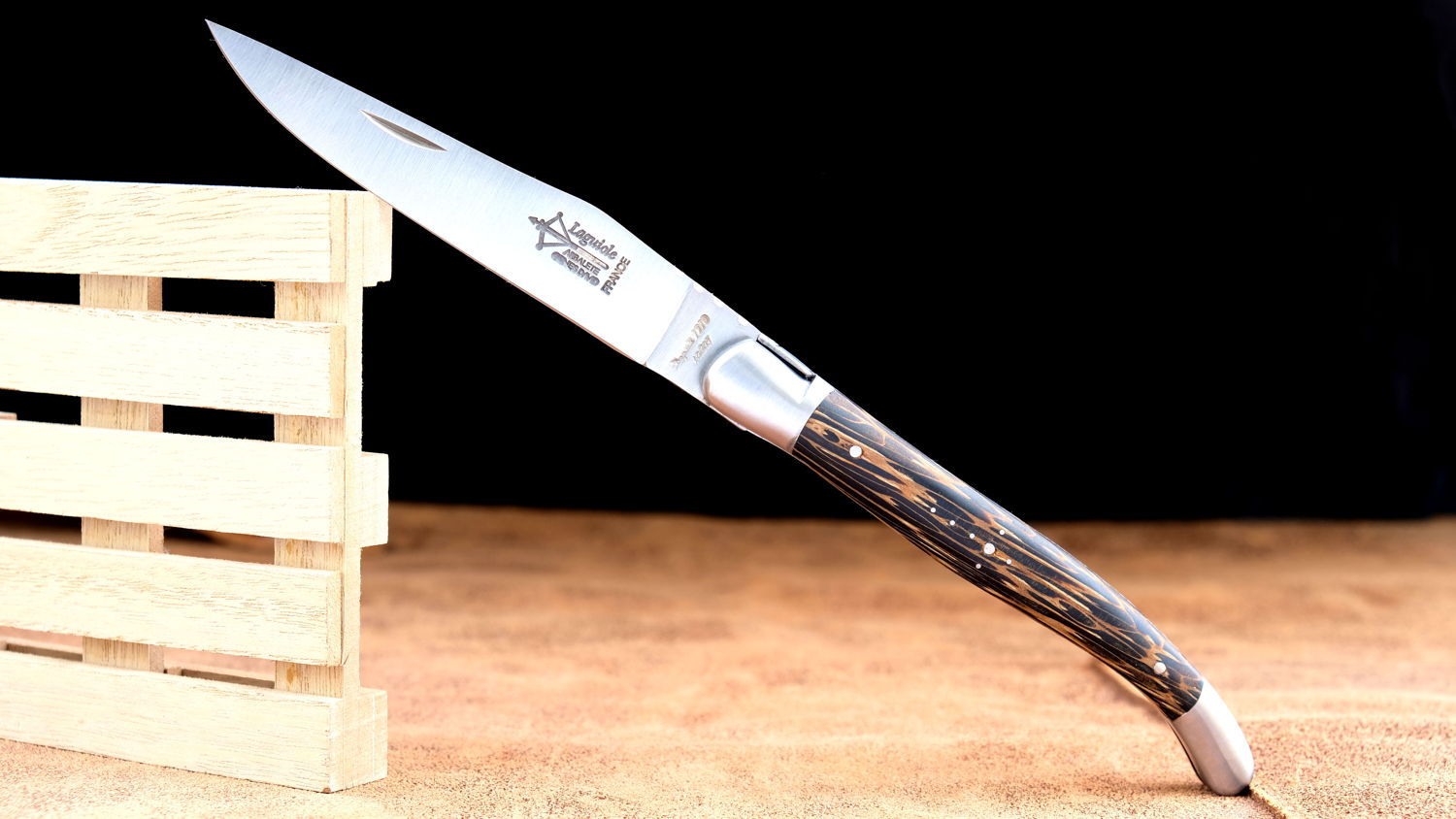
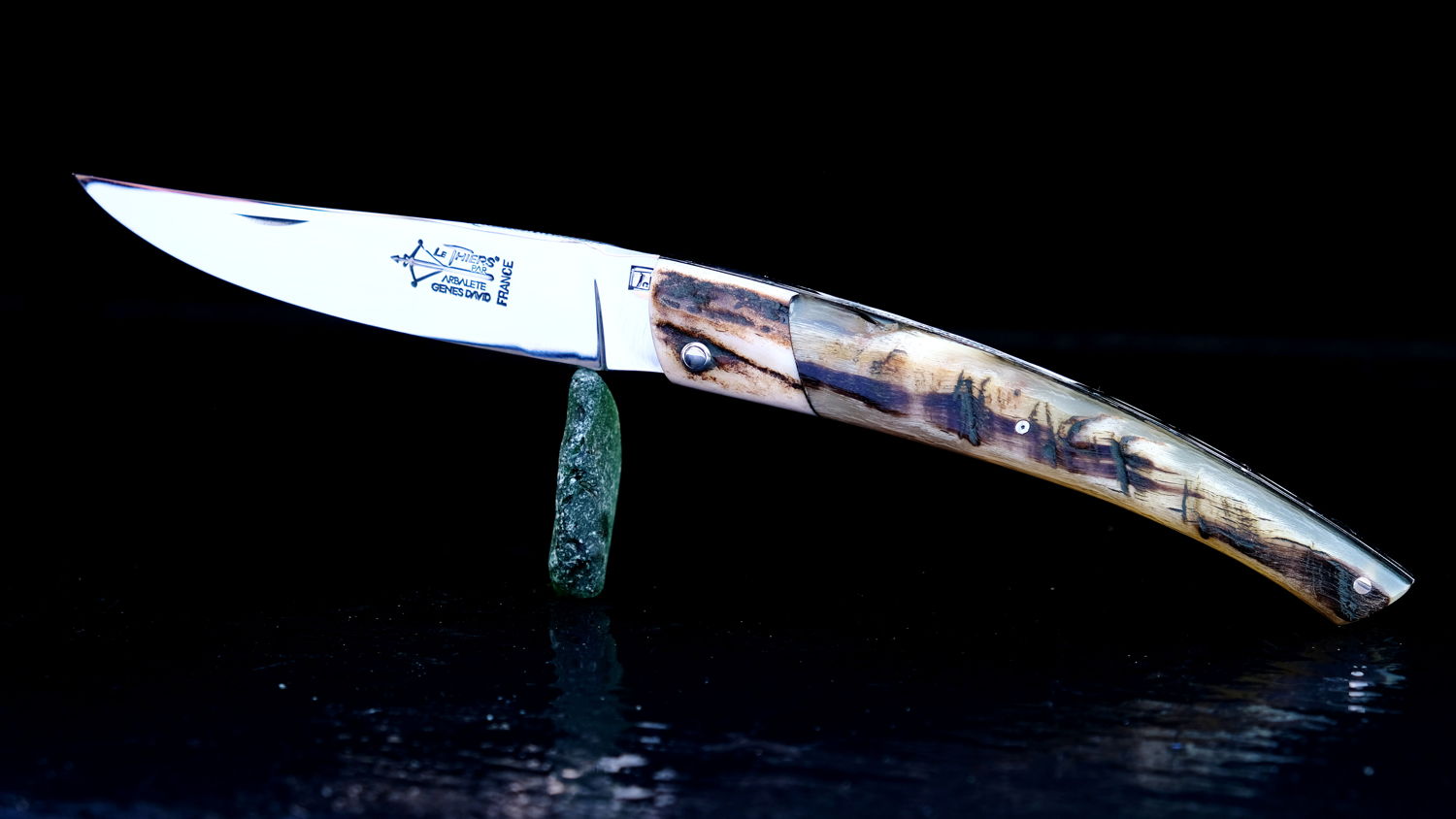
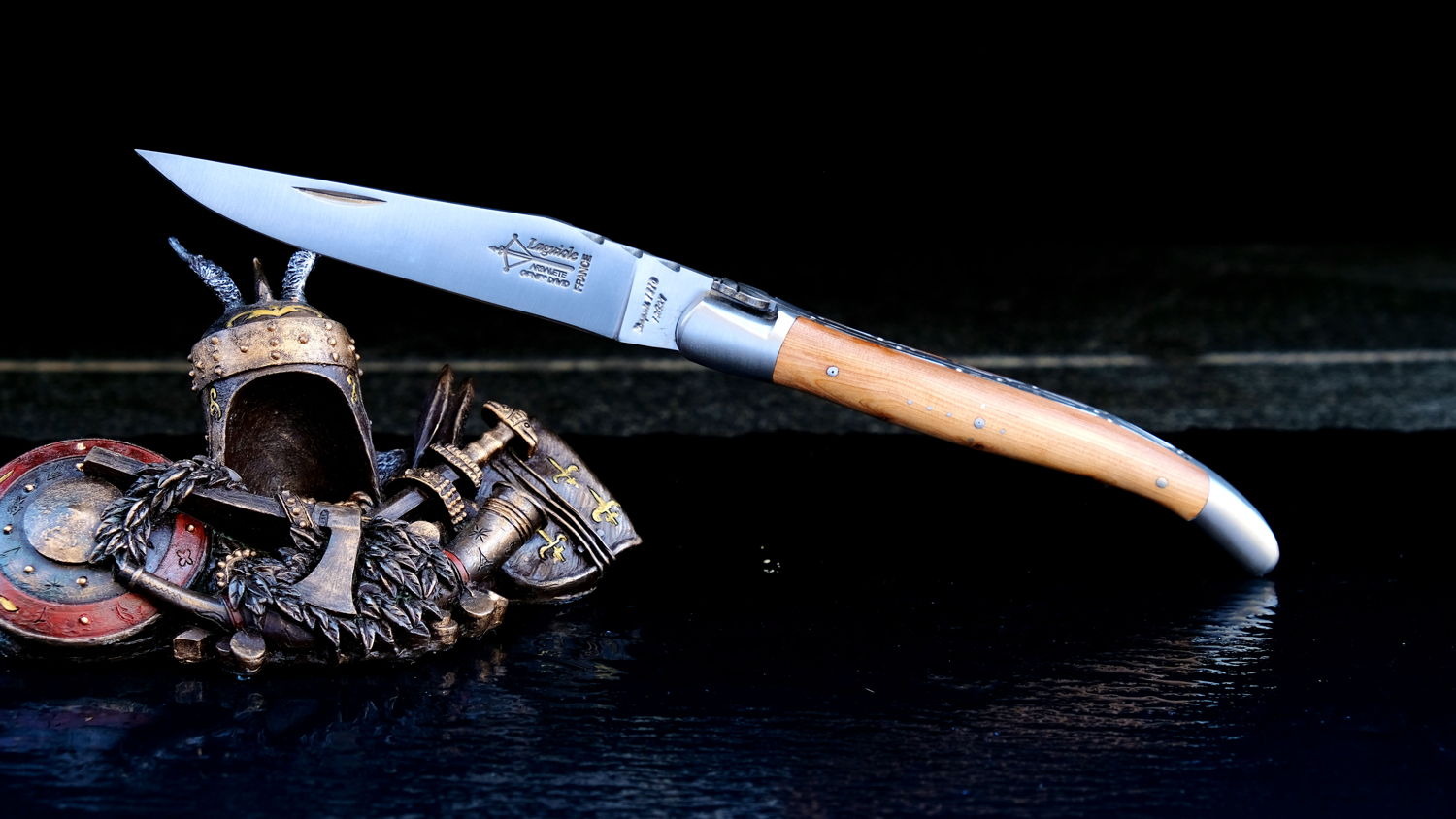
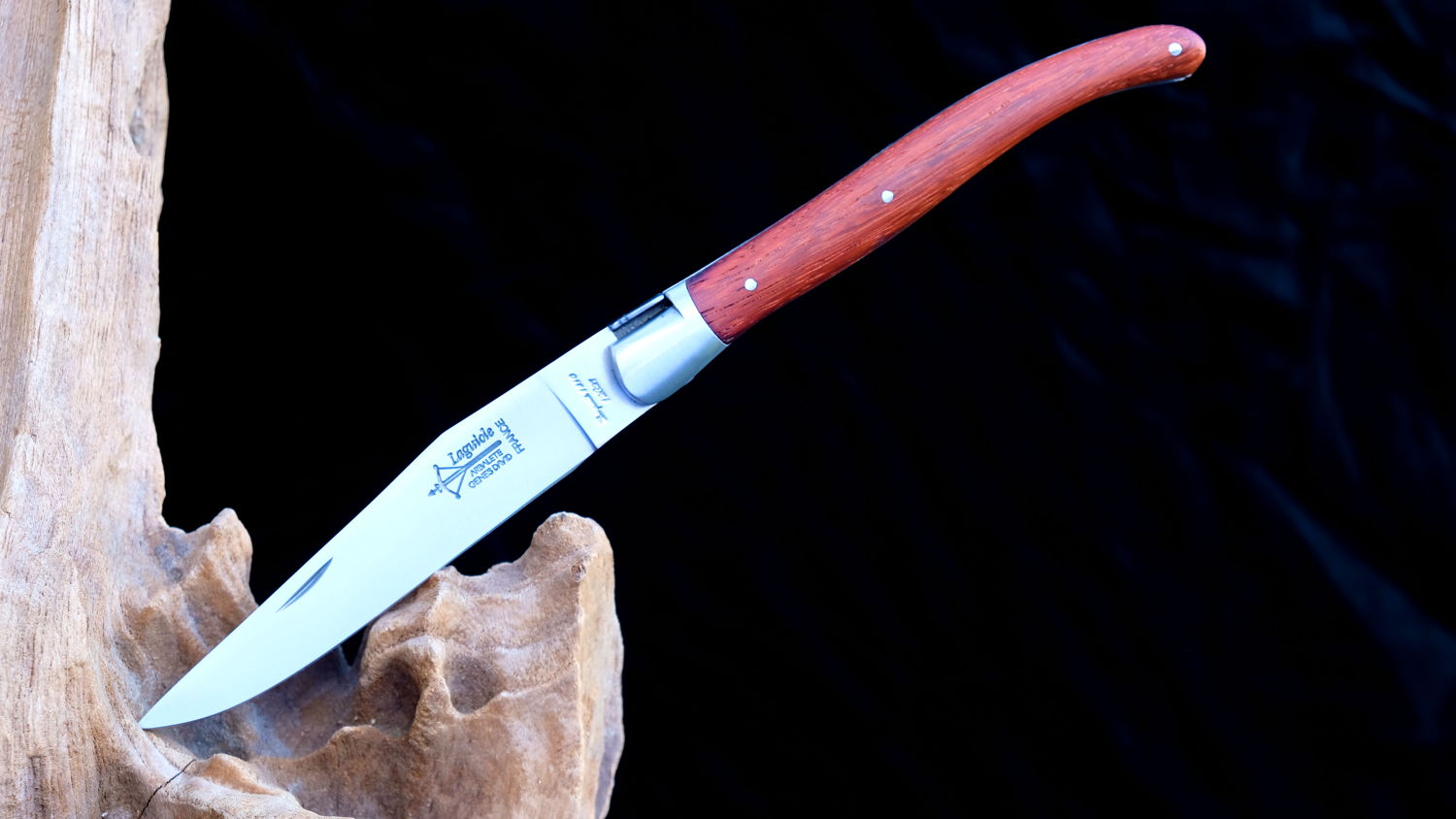
Laguiole Arbalète G. David: the forge and its knives
The forge introduces itself: its workshop, its signature and its knives
More about this forge
You own a knife by Laguiole Arbalète G. David? Then you can have it entered into the A.I.P.C.L. We check that it is genuine, and your knife receives its own number, its own page and its certificate - a proof that stays with it, even when it changes hands.
What we look at on a knife by Laguiole Arbalète G. David
Every forge has its signature. With Laguiole Arbalète G. David it is the complete manufacture in the firm's own workshop, from hardened steel to shaped horn. That is exactly what allows a knife to be identified, and it is what we examine in your photographs. If a question remains, we go to the forge itself.
A portrait of the forge
The story begins in 1810 with the Arbalète mark, one of the oldest cutlery marks in Thiers. In 1922 Genès David brought it into his workshop and shaped it into Arbalète G. David, with the crossbow as its emblem. As early as 1930 the forge began making Laguiole knives, at first without a bee, in the Aveyron pattern. From 1950 it deepened its work with the original Laguiole cutlers and so contributed a great deal to the popularity these knives enjoy today.
All production takes place in Thiers, from the rough blank to the packaging. A classic three piece model with blade, corkscrew and awl requires more than 200 separate operations. Every bee is filed by hand, every spring worked with skill that has been passed on for centuries. An in house design office continually develops new models and materials, so that alongside the Laguiole there are also regional patterns, cutlery and accessories.
Thiers has been the centre of French knife making since the Middle Ages. The water of the Durolle drove forges, mills and grinding shops here, and to this day around 80 per cent of French knife production comes from this area. Arbalète G. David is one of the forges that can not merely claim that origin but prove it, which is why the workshop fits the A.I.P.C.L. concept.
How it works
You register your knife. Right here on aipcl.com, with no sign-up beforehand: name the forge and upload the photographs - open and closed, the bee, the spine, the blade with the forge mark, and if available the receipt or packaging. Then you pay the examination fee; we create your customer account along the way.
We examine it. We compare your knife with what we know from 30 years of trading with French forges, and when in doubt we ask the forge itself.
You get the result. If your knife is genuine it receives its own number, its page on aipcl.com and the certificate as a PDF. If it is not, we tell you that too.
What it costs
10.00 eurosor 15 CARMOS points from original-laguiole.de - what those are is explained there.
Examining and registering one knife costs 10.00 euros.
If the examination shows that your knife does not come from a French forge, we refund the amount, of course. You pay only for a certificate you actually receive.
You order and pay here on aipcl.com, by PayPal or by bank transfer in advance. With the payment you buy the examination, not the certificate; whether we issue it depends on the result of examining your photographs.
Order the examination (10.00 euros)