
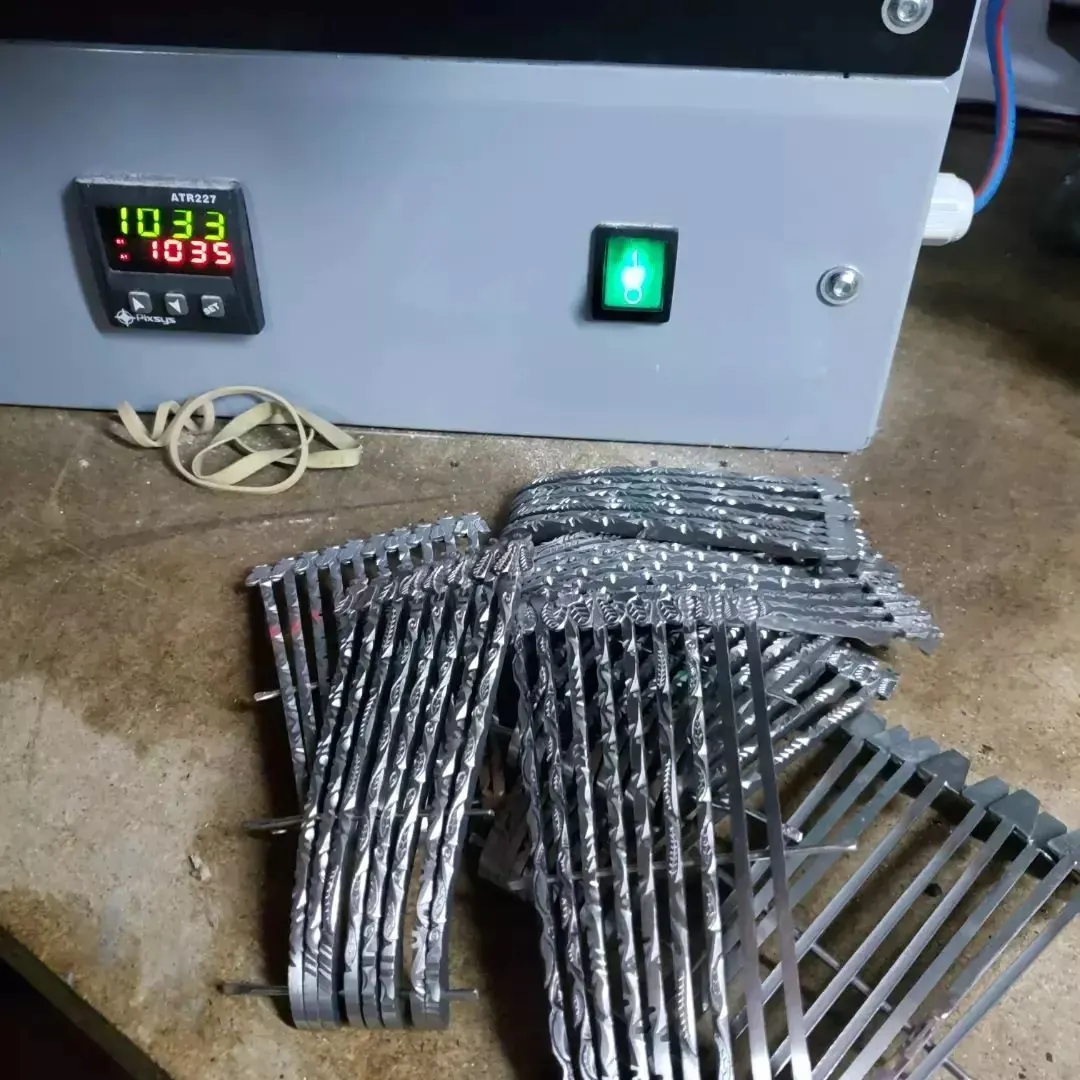
 Photo by the forge
Coutellerie Brun: the forge and its knives
The forge introduces itself: its workshop, its signature and its knives
A portrait of the forge
Thiers, the historic centre of French cutlery, is a place with many great names. Coutellerie Brun is not among the loudest of them, but among those where you notice the craft first.
Classic Laguiole shapes, cleanly guillochéd backs, a fit you check with your thumb rather than your eye: that is this forge's handwriting. No fuss, no effects, just knives that are right.
And where the forge does surprise, it surprises thoroughly. For one series Brun worked the wood of old fence posts into handles. Wood that stood out in the weather for decades, with its cracks, its discolouration and the mark of every single winter in it. Out of something that is otherwise burned comes a handle that exists only once.
That is exactly this workshop's stance: a good knife does not come from the rarest material, but from the right one. And a material is right when you can still see what it once was.
Inside the workshop
6These pictures were provided by the forge itself.
Hardening the springs
Photo by the forge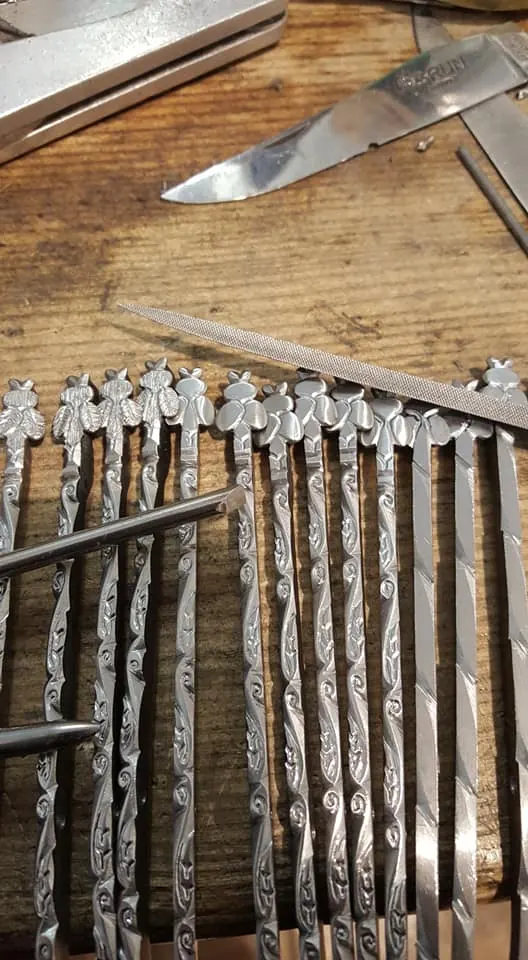
Springs and bees in the making
Photo by the forge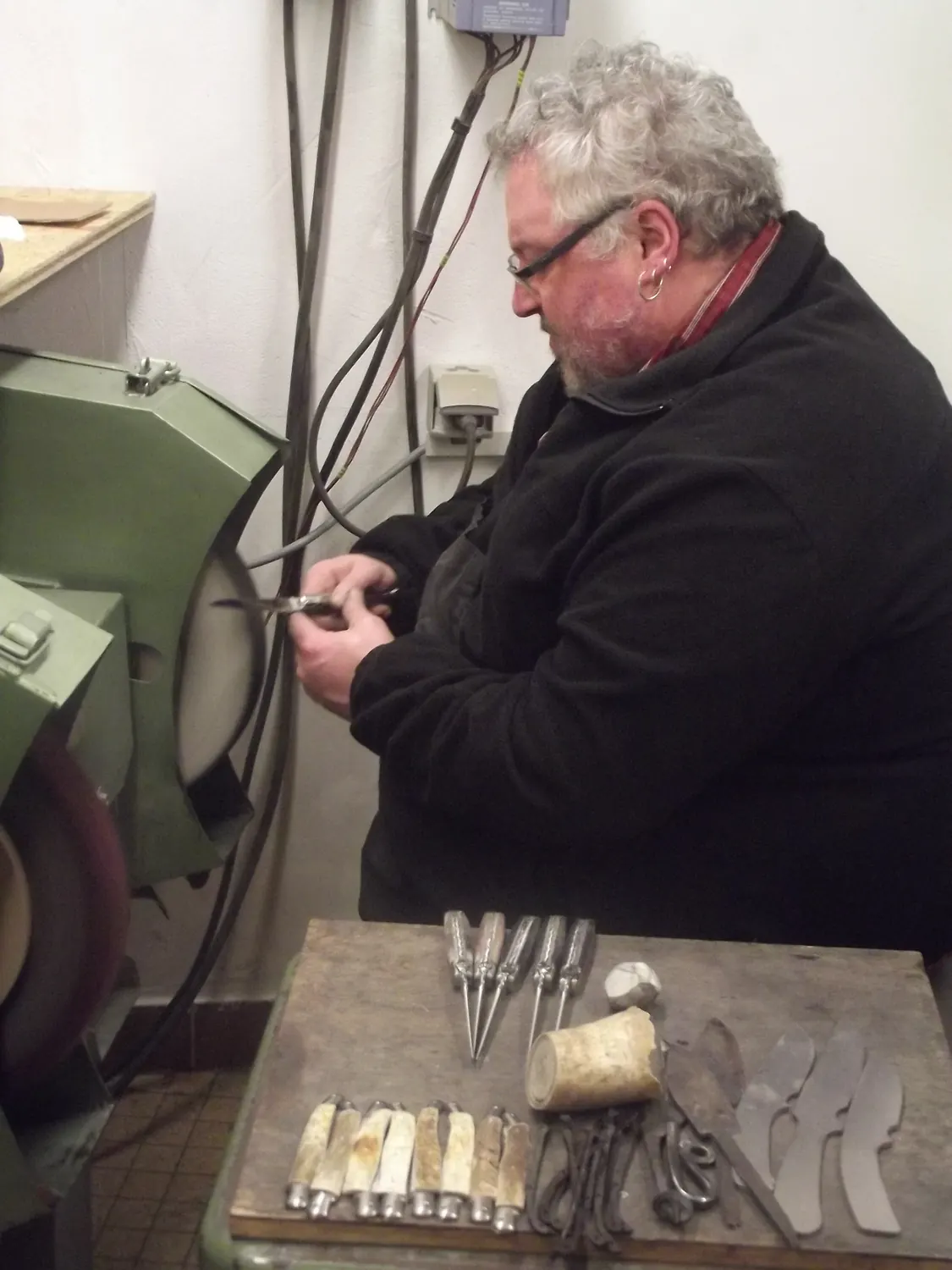
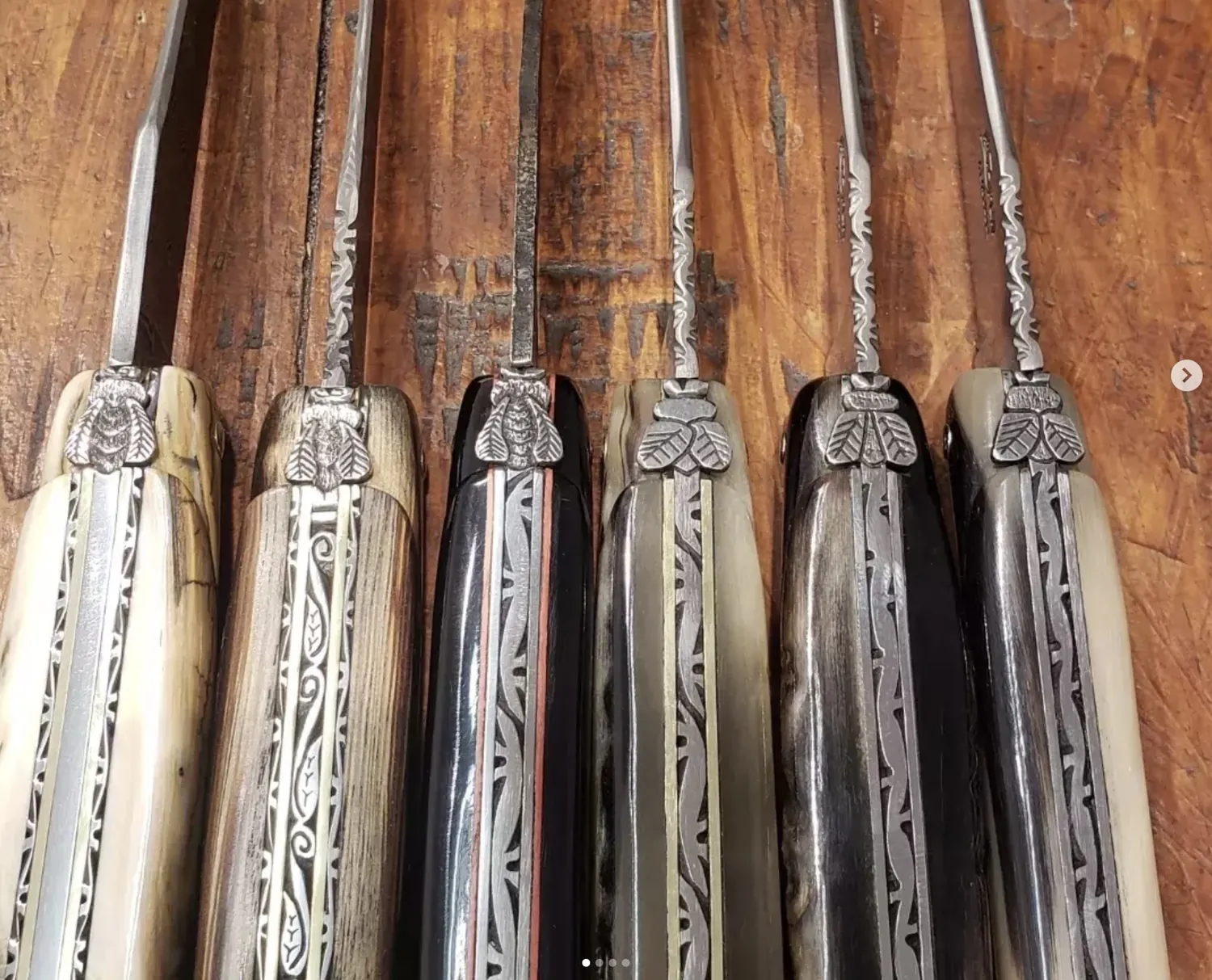
In production
Photo by the forgeNew and remarkable
4What the forge shows us: new models, special editions, arrangements from their own workshop.
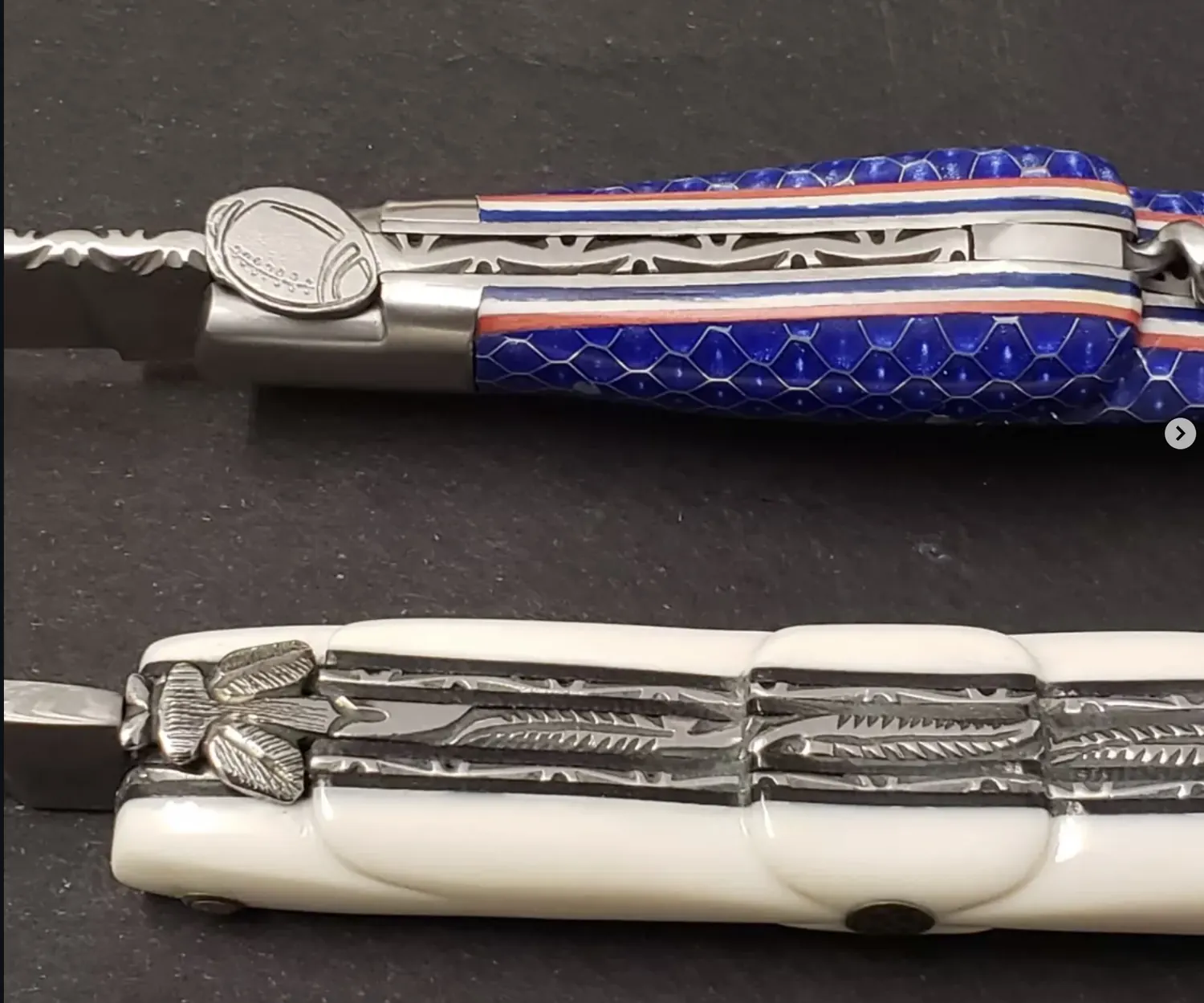
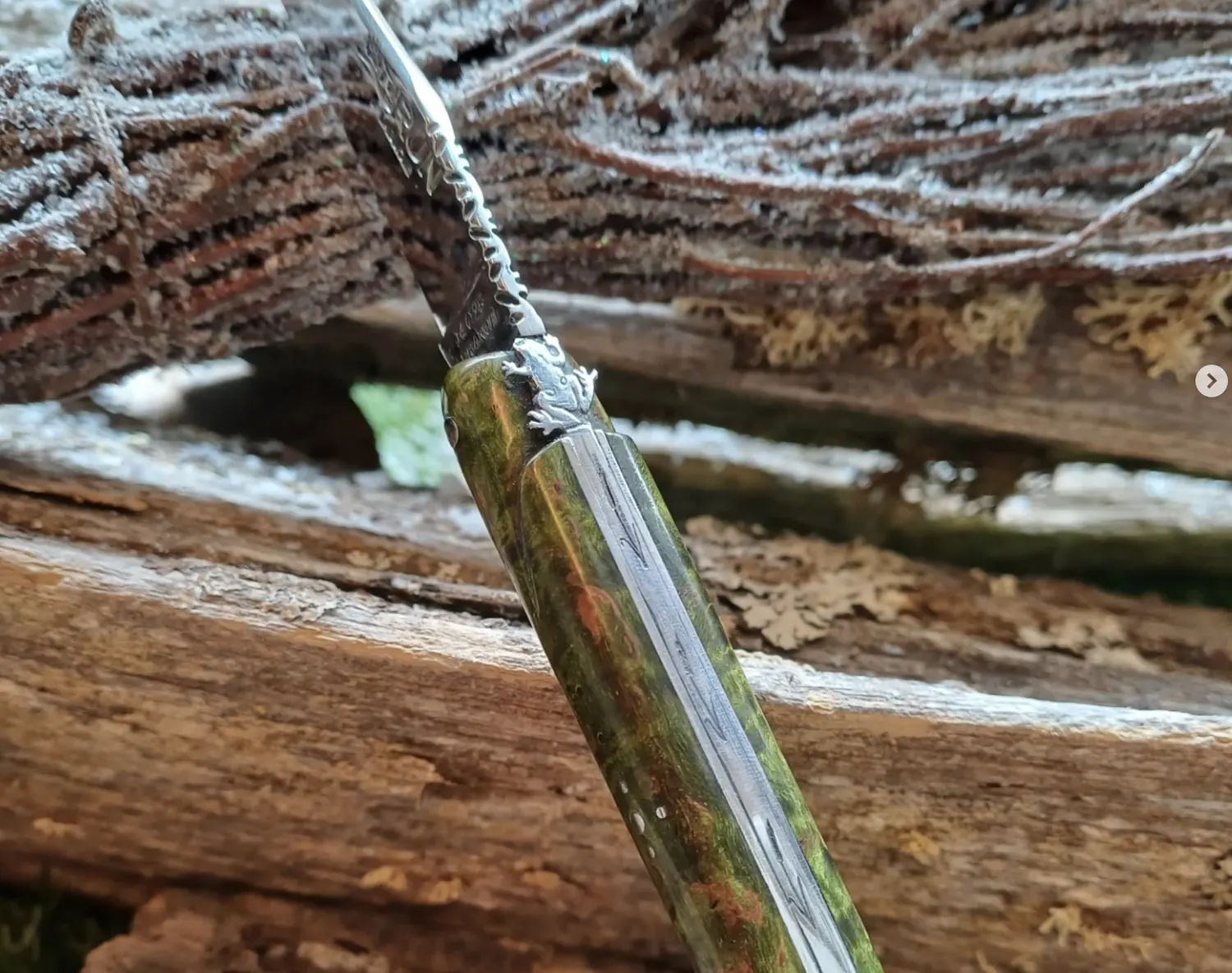
Where the knives are made
Coutellerie Brun
Everything about this forge, its history and its signature is on our page about the forge.
Have your Coutellerie Brun knife examined
You already own a knife from this forge? We can examine it and issue an A.I.P.C.L. certificate of authenticity - no matter where you bought it.
You own a knife by the Coutellerie Brun? Then you can have it entered into the A.I.P.C.L. We check that it is genuine, and your knife receives its own number, its own page and its certificate - a proof that stays with it, even when it changes hands.
What we look at on a knife by the Coutellerie Brun
Every forge has its signature. At Brun it is the calm of the execution: a fit without play, a cleanly worked spring, handle materials chosen out of a thought rather than for effect. That is exactly what allows a knife to be identified, and it is what we examine in your photographs. If a question remains, we go to the forge itself.
How it works
You register your knife. Right here on aipcl.com, with no sign-up beforehand: name the forge and upload the photographs - open and closed, the bee, the spine, the blade with the forge mark, and if available the receipt or packaging. Then you pay the examination fee; we create your customer account along the way.
We examine it. We compare your knife with what we know from 30 years of trading with French forges, and when in doubt we ask the forge itself.
You get the result. If your knife is genuine it receives its own number, its page on aipcl.com and the certificate as a PDF. If it is not, we tell you that too.
What it costs
10.00 eurosor 15 CARMOS points from original-laguiole.de - what those are is explained there.
Examining and registering one knife costs 10.00 euros.
If the examination shows that your knife does not come from a French forge, we refund the amount, of course. You pay only for a certificate you actually receive.
You order and pay here on aipcl.com, by PayPal or by bank transfer in advance. With the payment you buy the examination, not the certificate; whether we issue it depends on the result of examining your photographs.
Order the examination (10.00 euros)